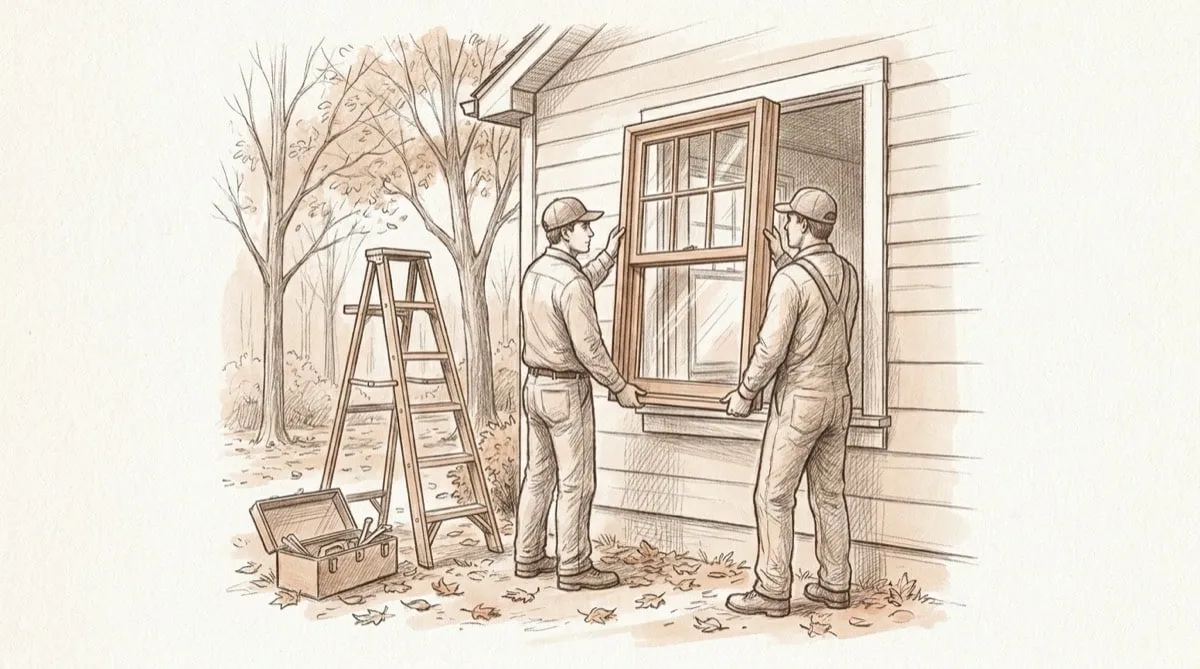
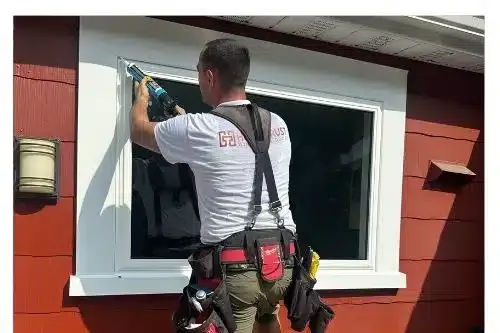
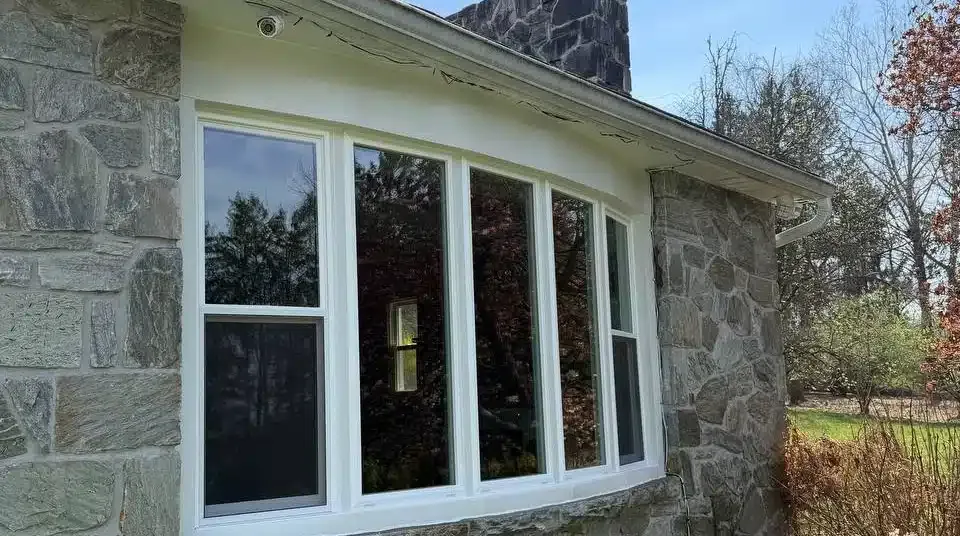
The difference is simple: a single-hung window only opens from the bottom sash, while a double-hung window opens from both the top and bottom sash. Both styles are common on Pennsylvania homes, both can be built to the same energy performance, and the right choice usually comes down to ventilation, cleaning, and how the room is used, not which one is objectively better.
Homeowners across our Huntingdon Valley base and the wider Philadelphia metro ask us this question on nearly every whole-home quote, because most houses end up with a mix of both styles once you account for kitchens, bathrooms, and second-story bedrooms. Here is what actually separates them.
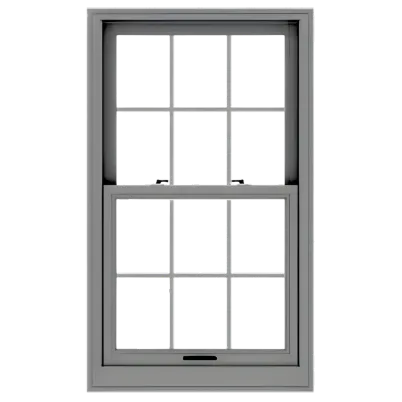
From the outside, single-hung and double-hung windows look almost identical, like this six-over-six unit. The difference is whether the upper sash moves.
What is a single-hung window?
A single-hung window has two glass panels, called sashes, stacked in the frame. The top sash is fixed in place and does not move. The bottom sash slides up and down on a track to open and close. This is the simpler of the two designs and the mechanism most homeowners grew up with in older Pennsylvania houses.
Fewer moving parts means a single-hung window typically has fewer places for air to leak around the sash edges over the life of the window, which is one reason it stays a common choice on straightforward replacement jobs.
What is a double-hung window?
A double-hung window looks nearly identical from the street, but both the top and bottom sash slide independently. You can crack the top sash open to vent hot air out while the bottom stays closed, or open both to create a natural draft through the room. This sash window style became the dominant window type in American homes because of that flexibility, and most double-hung windows sold today also tilt inward on both sashes, so you can clean the outside glass from inside the house.
Key differences homeowners actually notice
Ventilation. Double-hung wins here. Opening the top sash lets hot air escape near the ceiling while the bottom sash draws in cooler air, a natural convection effect a single-hung window cannot create on its own.
Cleaning. Most modern double-hung windows tilt in on both sashes for interior cleaning of the outside glass. Single-hung windows usually only tilt on the operable bottom sash, so the fixed top pane needs an outside approach, ladder or otherwise, on upper floors.
Energy efficiency. This is where homeowners are most often surprised: hung style is not the deciding factor. A single-hung and a double-hung window built with the same glass package, the same ENERGY STAR Northern-zone-rated low-E coating, and the same frame material perform to the same U-factor. What changes the energy bill is the glass and the installation, not which sash moves. We cover the Northern zone U-factor requirement of 0.22 or lower in detail in our Pocono winter windows guide.
Moving parts and long-term maintenance. A single-hung window has one operable sash, one balance system, one set of weatherstripping to maintain. A double-hung window doubles that. Over a 20 to 30 year window lifespan, fewer moving parts on a single-hung window generally means fewer components that can eventually need adjustment.
Look and resale expectation. In most Pennsylvania neighborhoods, double-hung is the expectation for street-facing rooms and matches the historical look of older housing stock. Single-hung is common and accepted in secondary rooms, additions, and budget-conscious full-home projects.
Which one does HomeTrust recommend?
We do not sell one style as universally better, because the right answer depends on the room. For a kitchen or a room that needs real cross-ventilation, we usually recommend double-hung. For a straightforward bedroom or a secondary elevation where ventilation from the bottom sash is enough, single-hung does the job at a lower part count with no meaningful difference in energy performance. On most whole-home projects we quote both styles together, matched in frame color and glass package so the house reads as one consistent job, the same whole-home approach we walk through in our guide on why homeowners renew their windows and doors.
We install both styles from our premium window lines, including Andersen single-hung and double-hung options, and we walk every homeowner through the actual NFRC performance label on the glass package, not just the marketing name of the style. If budget is the concern on a whole-home job, our financing options spread the cost across the full house instead of forcing a room-by-room compromise.
Talk to a local installer
Call us at (215) 341-3331 for a free in-home assessment. We will tell you plainly which style fits which room in your house, and we will never talk you into the more expensive option where it will not make a real difference.
Frequently asked questions
What is the main difference between single-hung and double-hung windows?
A single-hung window has a fixed top sash and an operable bottom sash. A double-hung window has two operable sashes, top and bottom, that both slide independently.
Are double-hung windows more energy efficient than single-hung windows?
Not inherently. Energy performance is set by the glass package, the low-E coating, and the frame material, the same U-factor rules apply to both styles. A single-hung and double-hung window built with identical glass perform the same on paper.
Which type is easier to clean?
Double-hung windows are generally easier to clean because both sashes usually tilt inward, so both panes of exterior glass can be cleaned from inside the house. Most single-hung windows only tilt on the operable bottom sash.
Do single-hung windows have fewer parts to maintain?
Yes. A single-hung window has one operable sash and one balance system. A double-hung window has two of each, which means twice the moving parts to maintain over the life of the window.
Can I mix single-hung and double-hung windows on the same house?
Yes, and it is common. Many whole-home projects use double-hung in kitchens and street-facing rooms where ventilation and appearance matter most, and single-hung in bedrooms or secondary rooms, matched in frame color and glass package so the house still reads as one consistent job.
Which style does HomeTrust recommend for older Pennsylvania homes?
It depends on the room, not the house. We recommend double-hung for kitchens and rooms that need real cross-ventilation, and single-hung for bedrooms or secondary elevations where the bottom sash alone provides enough airflow. Both meet the same ENERGY STAR Northern zone U-factor requirement of 0.22 or lower when built with the same glass package.